
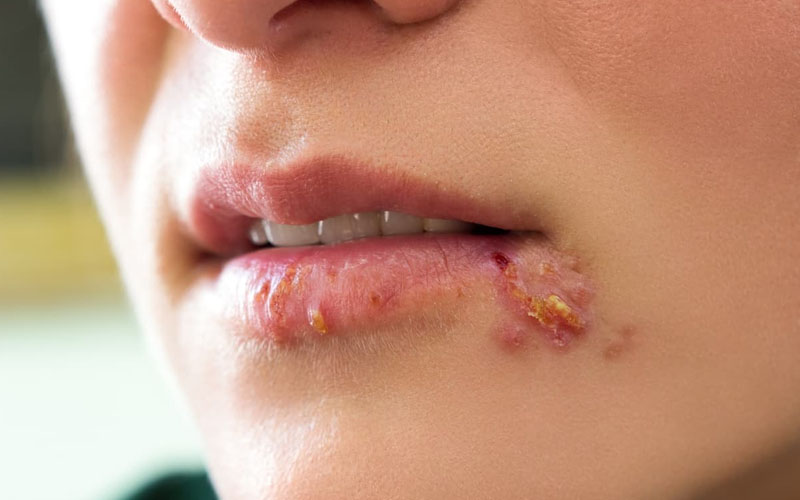
It is an itchy, painful, recurrent skin infection caused by herpes viruses and characterized by tiny blisters.
Cold sores, which most commonly appear on the lips and around the mouth first with an itch and then a blister, appear as fluid-filled blisters and then burst and turn into sores. Cold sores, which are painful and painful and disturbing in appearance, make it difficult to eat, speak and laugh. They take at least a week to heal. For many people, cold sores are a recurrent complaint.
Once you get herpes, it is very likely to recur over time. Some people get cold sores two to three times a year, but some people who have the virus only get cold sores once in their lifetime. In addition, there are people who carry the virus but never get cold sores and the virus remains 'dormant'
What are the types of herpes virus?
There are 8 types of herpes viruses, classified separately as HSV-1, HSV-2, HSV-3. Although it is seen that HSV-2 virus is mostly responsible for genital cold sores and HSV-1 virus is responsible for those on the face, both viruses can cause cold sores on the face and genital area.
How is herpes transmitted?
Herpes viruses are most commonly transmitted through saliva and close contact. It can be passed from person to person through the saliva of the person carrying the virus, through shared objects or through sexual intercourse. You do not need to have a cold sore to catch the virus, which makes prevention difficult. Most people catch the virus from adults when they are young.
Kissing young children is a risky act of affection in terms of transmitting the herpes virus. Touching a cold sore can also transmit the virus.
Herpes triggers
Stress that weakens immunity, surgery, excessive alcohol consumption, infections, sun exposure, pregnancy, hormonal changes, anemia, insomnia, injury to the area affected by the virus (herpes), febrile diseases that reduce body resistance, malnutrition, fatigue, high fever.
In addition, AIDS, eczema, severe burns, chemotherapy and drugs in organ transplant treatment can trigger herpes.
What causes genital herpes?
The main cause of genital herpes is infection with the herpes virus. It is usually transmitted through sexual intercourse. Genital herpes is mostly caused by the HSV-2 virus, but recent research has shown that the HSV-1 virus can also cause genital herpes. As in the facial area, genital herpes appears as painful blisters and sores. It can also be accompanied by other symptoms such as discharge, fever, weakness and headache.
Couples who want to have a child should be warned by their doctor if they have genital herpes virus. Although rare, genital herpes can cause premature birth, miscarriage or infection in the baby. If there is active disease, cesarean section is recommended, not normal delivery.
How to prevent herpes?
- Avoid kissing people you see with herpes.
- Do not share personal items (towels, makeup, razors, etc.).
- Wash your hands often.
- Use sunscreen.
- Try to stay away from stress.
- Do not touch your eyes or genitals without washing your hands.
- Avoid sexual intercourse when you have genital herpes.
- Do not touch the herpes.
- Use condoms during sexual intercourse, even if there is no visible herpes.
Herpes treatment
Herpes can be treated with creams and oral medications, but it is a disease that can recur. Preventive treatments can be given to patients who relapse very often. Once the virus enters the body, it remains for life. However, over time, cold sores occur less frequently than in the early years. In the meantime, after the virus becomes active for the first time, various drug treatments can be applied to prevent cold sores from appearing at long intervals, to make the symptoms milder or to heal the cold sore quickly. The most appropriate treatment will be determined by your physician.

